Chapter Seven: Commerce and Culture
Silk Roads: Exchange across Eurasia
- These land based trade routes linked pastoral and agricultural peoples as well sas the large civilization on the continents outer rim
- Silk Road trading networks prospered most when large and powerful states provided security for merchants and travelers
- Over many centuries, various technological innovations, such as yokes, saddles, and stirrups, made the use of camels, horses, and oxen more effective means of transportation across the cast distances of the Silk roads
- A vast array of goods made its way across the silk Roads, often carried in large camel caravans that traveled harsh and dangerous steppes, deserts, and oases of Central Asia
- Most of these goods were luxury products, destined for an elite and wealthy market, rather than staple goods, for only readily moved commodities of great value could compensate for high costs of transportation across such long and forbidding distances
- China: silk, bamboo, mirrors, gunpowder, paper, rhubarb, ginger, lacquerware, chrysanthemums
- Forest Lands of Siberia and grasslands of Central Asia: furs, walrus tusks, amber, livestock, horses, falcons, hides, copper vessels, tents, saddles, slaves
- India: cotton textiles, herbal medicines, precious stones, spices,
- Middle East: dates, nuts, almonds, dried fruit, dyes, lapis lazuli, swords
- Mediterranean Basin: gold coins, glassware, glazes, grapevines, jewelry, artworks, perfume, wool and linen textiles, olive oil
- Role as conduit of culture
- Buddhism spread across the Silk Road from india to Central Asia
- Doctrines changed as well
- Diseases too traveled the trade routes of Eurasia, and with devastating consequences
- Each of the major population centers of the Afro Eurasian world had developed characteristic disease patterns, mechanisms for dealing with them, and in some cases immunity to them
- People were exposed to unfamiliar diseases for which they had little immunity or few effective methods of coping
- Even more widespread diseases affected the Roman Empire and Han Dynasty China as the Silk Roads promoted contact all across Eurasia
- Small pox and measles devastated the populations of both empires, contributing to their political collapse
- The exchange of diseases gave Europeans a certain advantage when they confronted the people of the Western Hemisphere
- Sea based trade routes connected distant peoples all across the Eastern Hemisphere
- Paralleling the Silk Road trading network, a sea based commerce in the indian ocean basin connected the many peoples between china and East Africa
- What made Indian Ocean commerce possible were the monsoons, alternating wind currents that blew predictably eastward during the summer months, and westward during the winter
- Indian Ocean commerce did not occur between entire regions and certainly not between countries
- Mediterranean Basin: ceramics, glassware, wine, gold, olive oil
- East Africa: ivory, gold, iron goods, slaves, tortoiseshells, quartz, leopard skins
- Arabia: Frankincense, myrrh, perfumes
- India: Grain, ivory, precious stones, cotton textiles, spices, timber, tortoiseshells
- Southeast Asia: Tin, sandalwood, cloves, nutmeg, mace
- China: silks, porcelain, tea
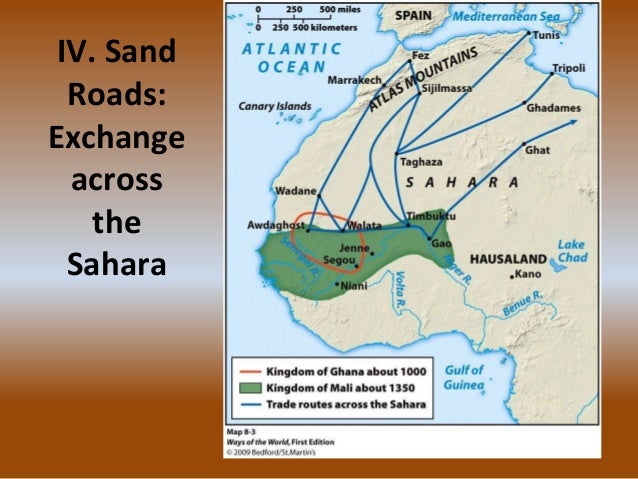
- Sand Road commercial networks had a transforming impact, stimulating and enriching West African civilization
- Trans-African trade was rooted in environmental variation
- The great Sahara held deposits of copper and especially salt, while its oases produced sweet and nutritious dates
- What they sought was gold, which was found in some abundance in the border areas straddling the grasslands and the forests of West Africa
- This long distance trade across the sahara provided both incentives and resources for the construction of a new and larger political structure
- Royal women played important political roles in many places; and oral traditions and mythologies frequently portrayed a complementary rather than hierarchical relationship between the sexes

No comments:
Post a Comment